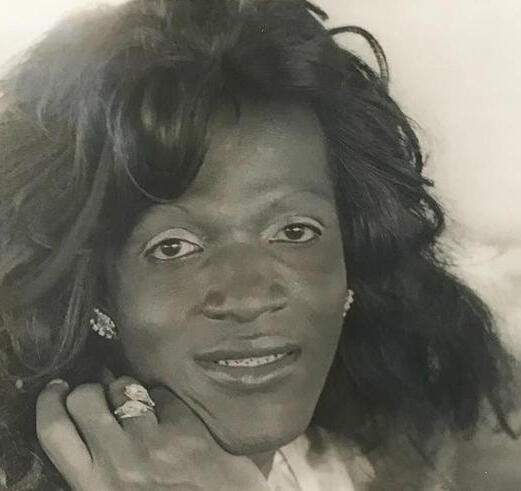
Marsha P. Johnson
Sydney Z. | 5th hour
Early Life
Identity
Activism and Work
Death
Legacy
Bibliography
Early Life
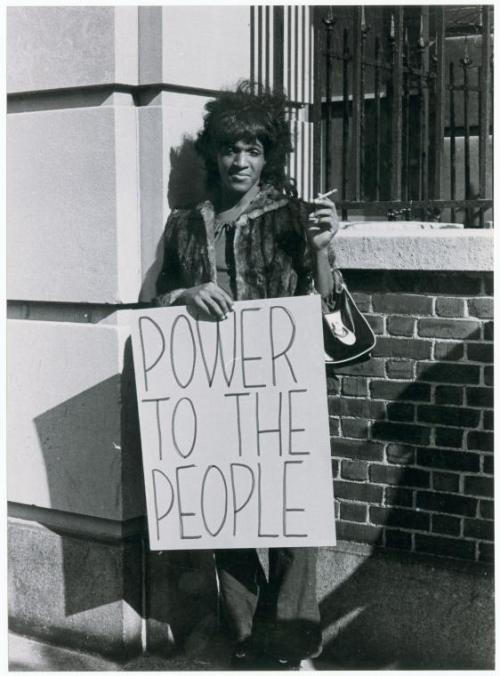
Marsha, born Malcolm Michaels, was born in Elizabeth, New Jersey on August 24th, 1945. Marsha was a devout Christian throughout her life, taking interest in other faiths such as Catholicism.
Marsha started wearing dresses at age 5 but stopped temporarily due to harassment from boys in her neighborhood.
After graduating from Highschool in1963, she left for New York City with only $15 and a bag of clothes
She waited on tables after moving to Greenwich Village.
Home | Continue to Identity
Identity
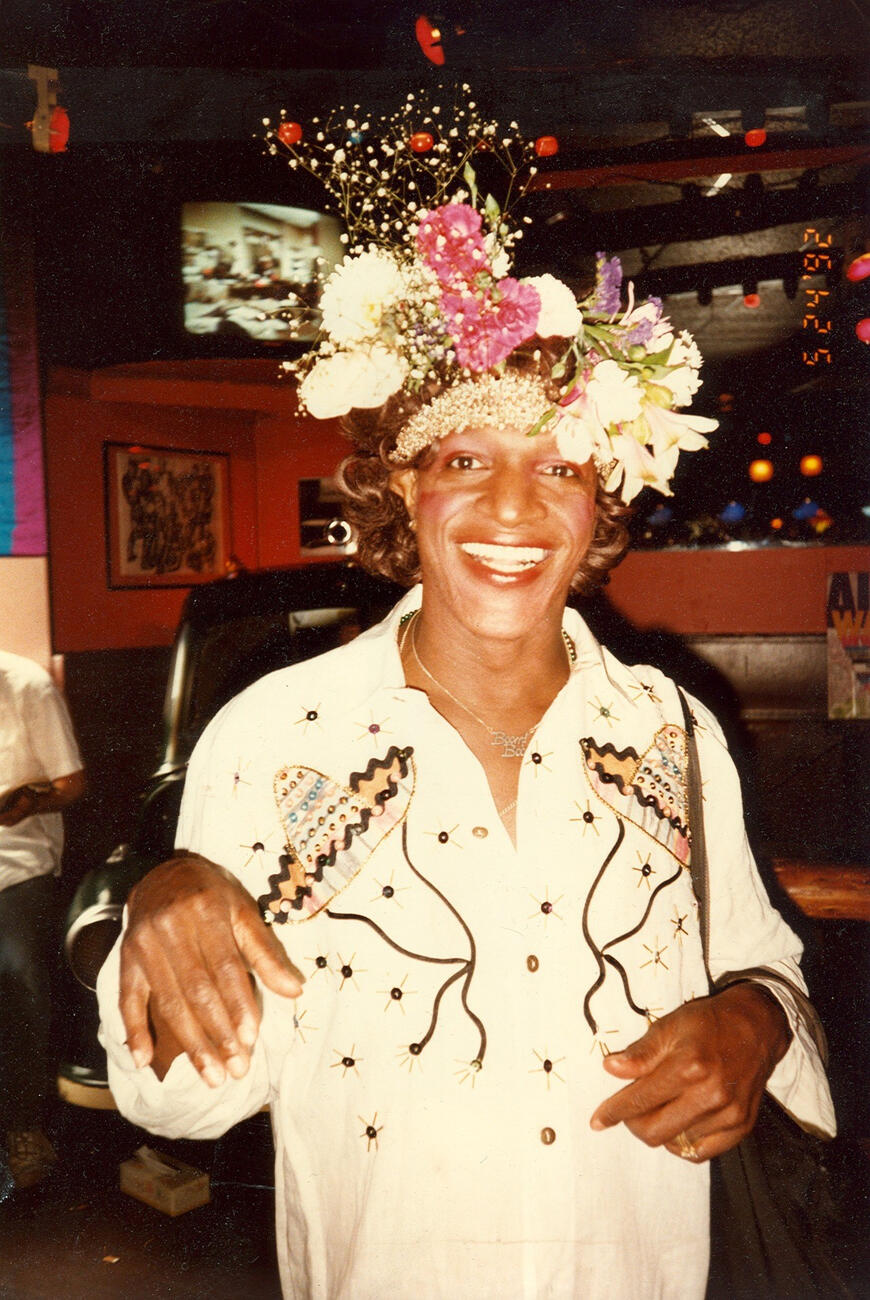
Her first drag name was "Black Marsha", but later on she decided on "Marsha P. Johnson" Johnson came from the restaurant, "Howard Johnson's" on 42nd street, and the 'P' stood for pay it no mind, which was the phrase she would use when questioned about her gender.
Marsha identified as gay, a transvestite (which is now seen as a slur, but she referred to herself as that because back in the day the term 'transgender' was not well known), and a drag queen.
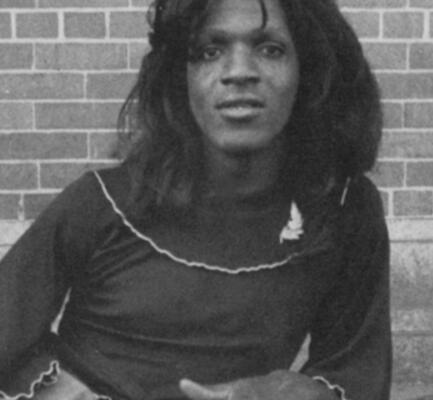
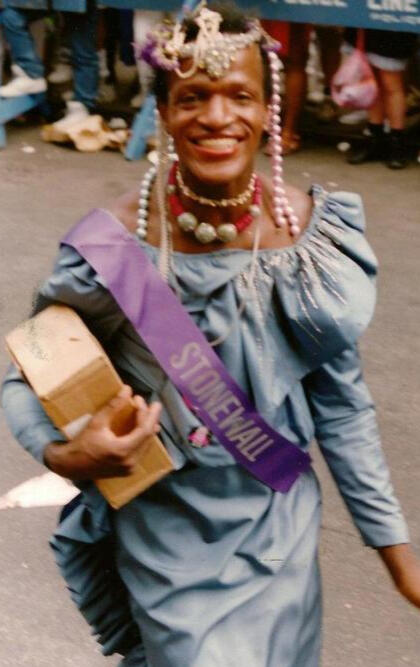
She referred to her drag as non-serious drag because she could not afford expensive clothing. Marsha was known for putting flowers in her hair, wearing flowing robes, shiny dresses, plastic red heels, and brightly colored wigs.
Activism and Work
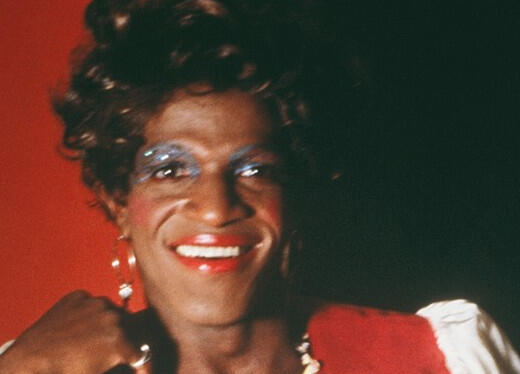
Marsha was one of the first drag queens allowed into the Stonewall Inn shortly after they began allowing women and drag queens to enter; it was previously a bar only for gay men.
On the early morning of June 28th, 1969, the Stonewall uprising occured. The first two nights were the most intense. The clashes with Police would result in a series of spontaneous demonstrations and marches through the gay neighborhoods in Greenwich Village.
Marsha denies that she started the riots. She says that she had arrived at 2am (the riots started at 1:20am) and that the riots had already started, and the police had already set the Stonewall Inn on fire. People say that Marsha threw a shot glass at a mirro and shouted "I got my civil rights.", but that has been heavily disputed. It was also claimed that she threw a brick at a cop, an account that was never verified. Marhsa herself said that she had not been present at the Stonewall Inn when the riots broke out. She had heard about it and went to get her friend, Sylvia Rivera, who was sleeping at a park uptown on a bench, who told her about it. However, it is known that on the second night, she climbed on a lampost and dropped a bag of bricks on a cop car
After Stonewall, Marsha joined the Gay Liberation Front. One of her most direct actions was in 1970, her and other GLF members had a sit-in protest in Weinstein Hall at NYU after administrators had cancelled a dance they found out was sponsored by Gay Organizations
Marsha and her close friend, Sylvia Rivera co-founded STAR (Street Transvestite Acionl Revolutionaries) the two of them became a visible presence at gay liberation marches. In later years, they were banned by the gay and lesbian committee of the gay pride parade, claiming they didn't want drag queens because they would give them a bad reputation.
Johnson was once confronted by police for hustling. As they went to apprehend her, she hit them with her handbag, which contained two bricks.This sent her to court. When asked why she was hustling, she claimed she was trying to secure enough money for her husband's tombstone. When asked what happened to her husband, she said "Pigs killed him." Initially she was sent to serve her 90 days, but she was later sent to Bellevue (Mental hospital in NYC)
With Sylvia, Marsha made the STAR house, a shelter for LGBT street kids in 1972. Marsha worked to provide, food, clothing, emotional support, and a sense of family for young LGBT people in the STAR house or on the lower east side of NYC.
Home | Back to Identity |Continue to Death
Death
Shortly after the 1992 pride parade, Marsha's body was found floating in the Hudson River. Police quickly ruled the result as a suicide. Her close friends and local community members claimed that Marsha was not suicidal and noted the massive wound on the back of her head. Sylvia claimed that her and Marsha had made a pact to cross the Hudson River together.
Many people came forward and said that they saw a group of people harassing her. A neighborhood resident was seen fighting with Marsha. During the fight he used a homophobic slur, and later bragged to someone in the bar that he killed a drag queen named Marsha. Locals also stated that law enforcement was not interested in investigating her death.
She was cremated and her ashes were spread in the river by her friends, followed by a funeral at a local church.
In 2018, New York Times published a belated obituary for her.
Home | Back to Activism | Continue to Legacy
Legacy
Drag legend RuPaul Charles has called Marsha "The True Drag Mother". In season four of RuPsul's Drag Race, RuPaul told her contestants that Marsha "Paved the way for all of us."
Marsha has had several films about her, including fictional ones where she is a character, such as Stonewall (2015) and Happy Birthday, Marsha! (2016). She has also had two documentaries made about her, Pay it no Mind, The Life and Times of Marsha P. Johnson (2012) the film includes segments from interviews she's had and interviews with many of her friends from Greenwich Village. The Life and Death of Marsha P. Johnson (2017) alike to Pay it no Mind, includes segments and interviews. It also follows transwoman VIctoria Cruz as she investigates Marsha's death.
Home | Back to Death | Continue to Bibliography